Books for designers who want to work on hard problems
Considering the leap into a new challenge like public health or climate change? These books offer guidance.
By Daniel Burka

I spent almost 20 years designing pretty typical digital tools before I made the jump to become a designer in global public health. I have designed lots of consumer software, e-commerce systems, mobile apps, and logos. Even so, jumping into a full-time leadership role in a public health charity called Resolve to Save Lives was intimidating. Reading books helped me to get the lay of the land.
These are some of the books that we frequently recommend to designers who are setting out to make a positive difference in the world:
Best for people thinking about their next move
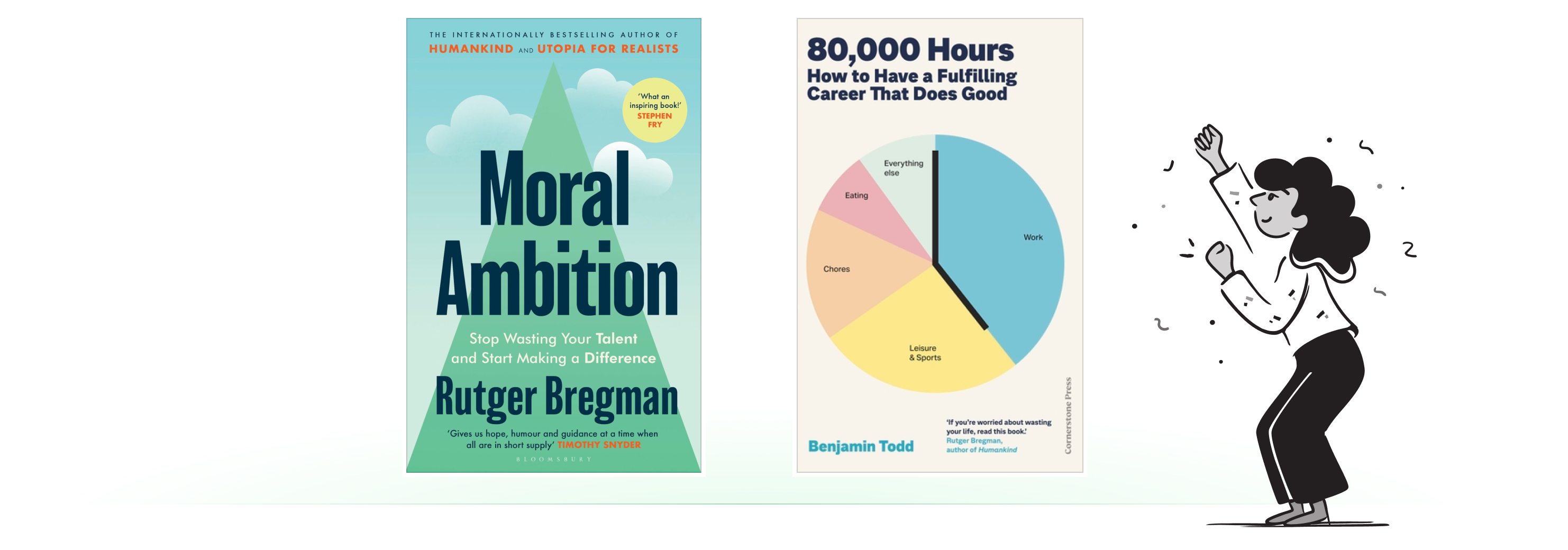
Moral Ambition by Rutger Bregman
In Moral Ambition, Rutger Bregman argues that many talented people spend their careers optimizing for status, comfort, or prestige when they could be applying their abilities to solving the world’s most important problems. He makes the case that people should work on high-impact issues like poverty, public health, climate change, and institutional reform. I like that this book includes many inspiring stories of people, just like you, who have gone on to make positive change in the world. We wrote a full review of this book.
80,000 Hours by Benjamin Todd
Todd argues that your career is one of the biggest opportunities you have to make a positive impact on the world. He makes the case that choosing where to work, what problems to focus on, and how to use your skills can have an outsized effect on issues like global health, poverty, climate change, and emerging technologies. In particular, the book provides a strong framework for choosing what role might have the most positive impact in the world. Note: that this book is from a group called Effective Altruists and is biased towards some of their core philosophies (like earning maximum $$$ to contribute to hard problems) that we do not wholeheartedly endorse.
Best for people who want to avoid past mistakes
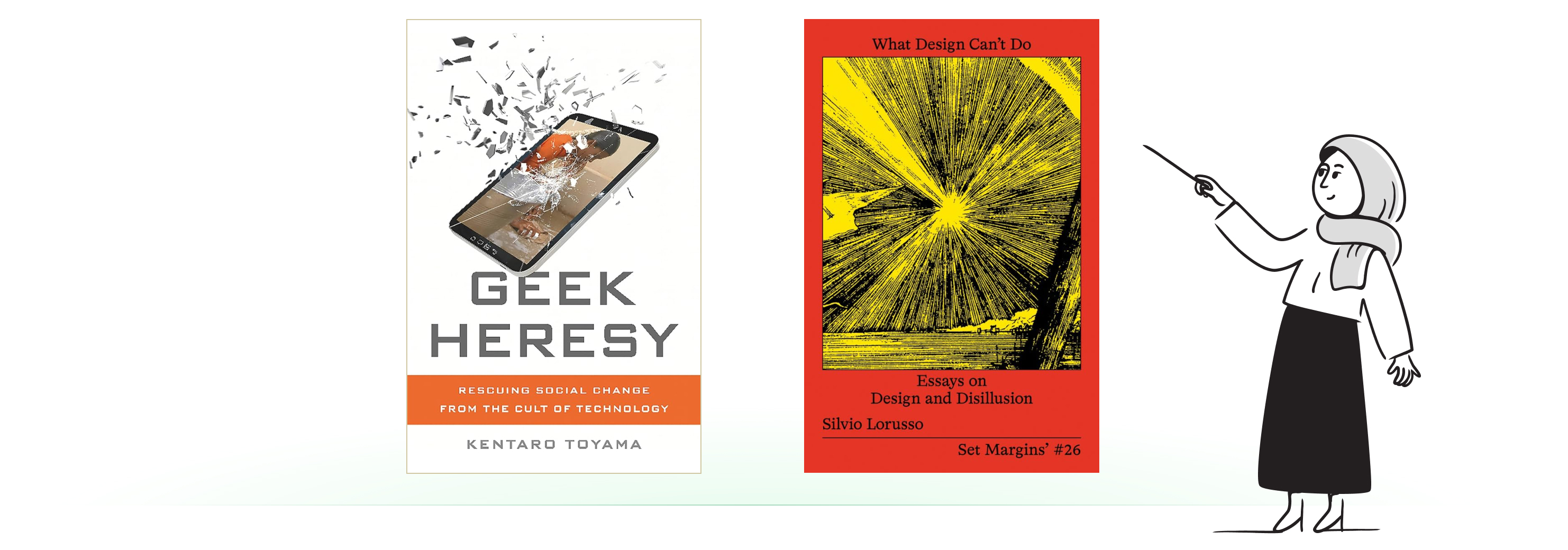
Geek Heresy by Kentaro Toyama Top pick
This book challenges the tech-first idea that technology on its own can solve the world’s biggest problems. Drawing on his experience in international development (especially education projects in India as part of Microsoft Labs) Toyoma argues that social change depends far more on people, institutions, and local capacity than on clever apps or new devices. The book is excellent. It’s a valuable corrective for designers and technologists who want to improve the world, reminding us that technology is most effective when it amplifies strong human systems rather than trying to replace them. Note: This is an older book, but still very relevant.
What Design Can't Do by Silvio Lorusso
In this academic and well-researched book, Silvio Lorusso pushes back against the idea that design can (or should) solve every problem. He examines the limits of design, questioning the industry’s tendency toward solutionism and its faith in innovation as a cure-all. For designers who want to make a positive impact, the book offers a useful challenge: sometimes the most responsible response is not to design something new, but to better understand the social, political, and economic forces already at work. It might surprise you, but this book was one of my inspirations for starting Hard Problems.
Best for people who want to work in the public sector
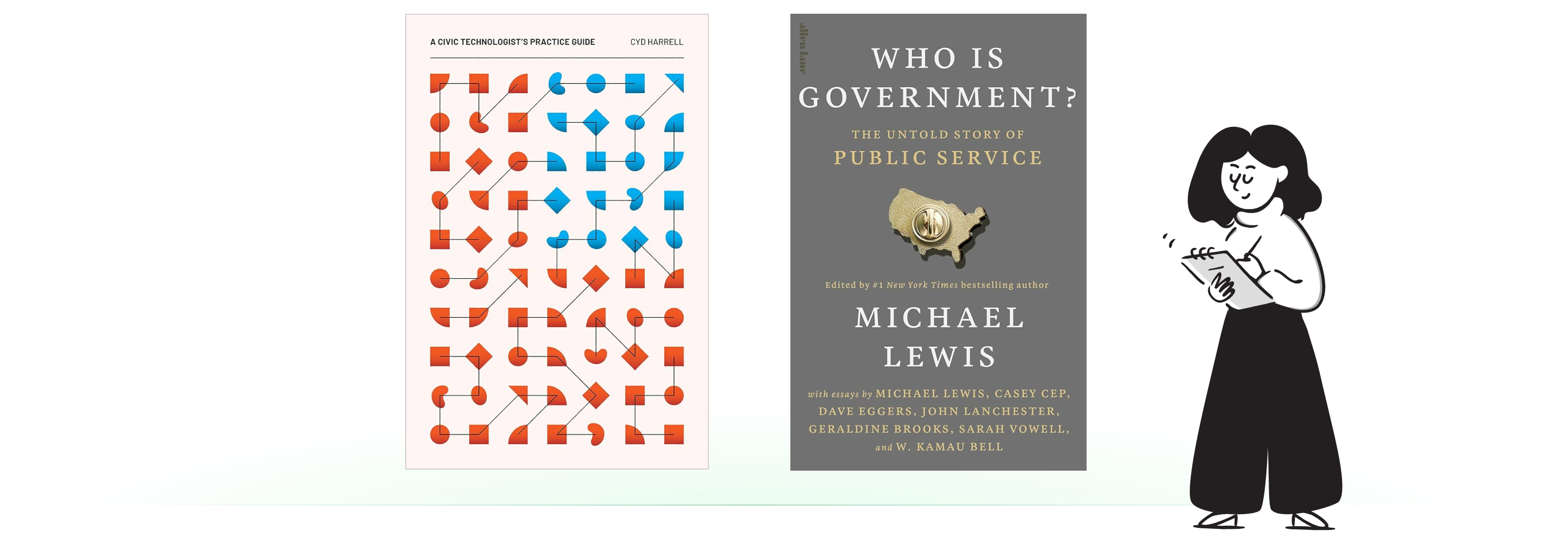
A Civic Technologist's Practice Guide by Cyd Harrell Top pick
Cyd is a designer and digital leader for the City of San Francisco. This book draws on her years of experience in government and public-interest technology to show what it actually takes to build useful digital services for the public. Rather than focusing on tech alone, she explores how policy, institutions, procurement, and user needs shape successful civic projects. The book is packed with practical lessons for designers who want to work in government, public services, or other mission-driven organizations.
Who is Government? by Michael Lewis
Journalist Michael Lewis tells the stories of public servants whose work quietly affects millions of lives, often without recognition or public attention. For designers considering public-sector work, it’s a reminder that government is not an abstract bureaucracy but a collection of people working on some of society’s most important challenges.
Best for people who want to work in public health
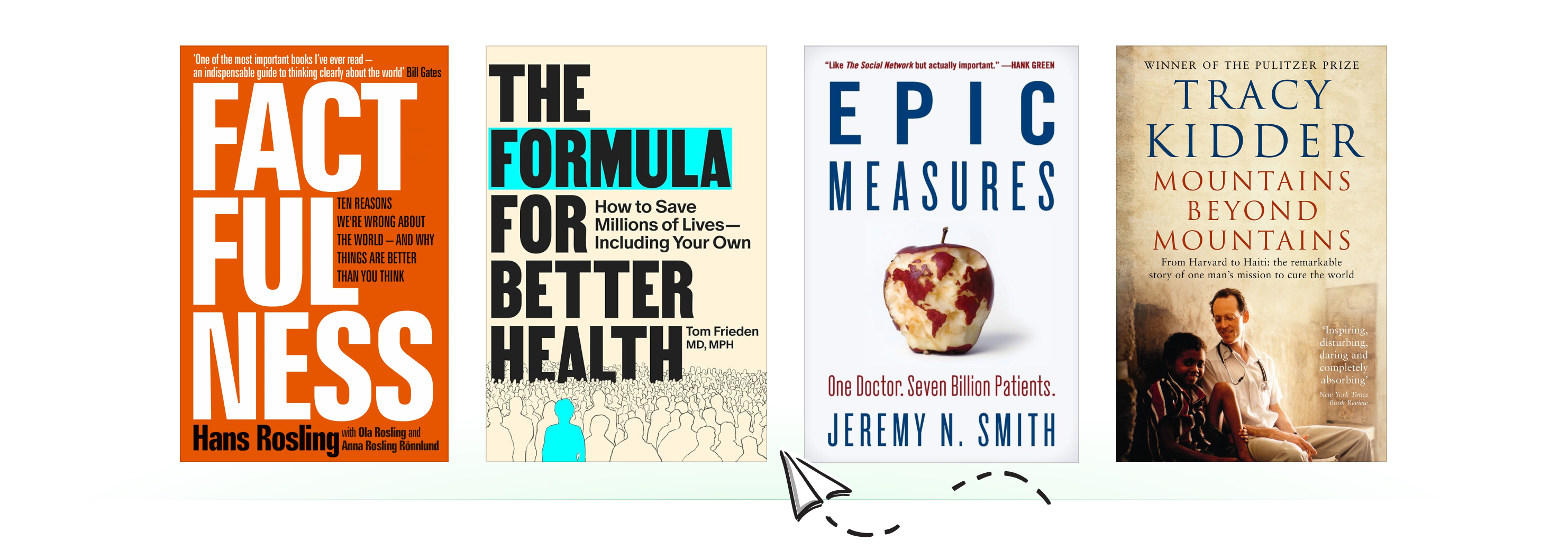
Factfulness by Hans Rosling Top pick
In this classic of public health, Rosling argues that the world is often far better than we think, and that our instincts can lead us to misunderstand trends in health, poverty, education, and development. Using data and beautiful information design, he shows how to replace pessimism and gut reactions with a more accurate view of reality. For people who want to make a difference, the book provides a valuable foundation: understanding where progress has happened, where challenges remain, and how evidence can guide better decisions. Unfortunately, Rosling died shortly after publishing this book, but the organization Gapminder continues this important work.
The Formula for Better Health by Dr. Tom Frieden
This book is written by the founder of Resolve to Save Lives, where I used to work. Tom also ran the US CDC under President Obama. Dr. Frieden draws on decades of experience in public health leadership to explain why some health interventions save far more lives than others. He introduces a practical framework for identifying solutions that are scalable, evidence-based, and capable of producing population-level impact. You will find this book useful for thinking about what problems are worth your greatest focus and how your design or technology work fits into the larger context of public health programs.
Epic Measures by Jeremy N. Smith
Data is at the core of good public health work. Smith tells the story of Chris Murray (founder of IHME) and the effort to measure the true burden of disease around the world. The book explores how data can reveal hidden health problems, challenge assumptions, and help direct resources to where they can do the most good. For anyone interested in healthcare or public health, it’s a fascinating look at how better measurement can lead to better decisions — and ultimately save lives. I found this book to be particularly helpful when I jumped into public health work, ten years ago.
Mountains Beyond Mountains by Tracy Kidder
Journalist Tracy Kidder follows the life and work of Paul Farmer, a doctor who dedicated himself to bringing high-quality healthcare to some of the world’s poorest communities. The book challenges the assumption that life-saving care is only possible in wealthy settings and shows what can be achieved through persistance and an unwavering commitment to patients. This book always reminded me to be in the field in rural clinics as often as possible in order to keep solving real-world problems for patients that fit their local context.
Best for people who want to work in healthcare
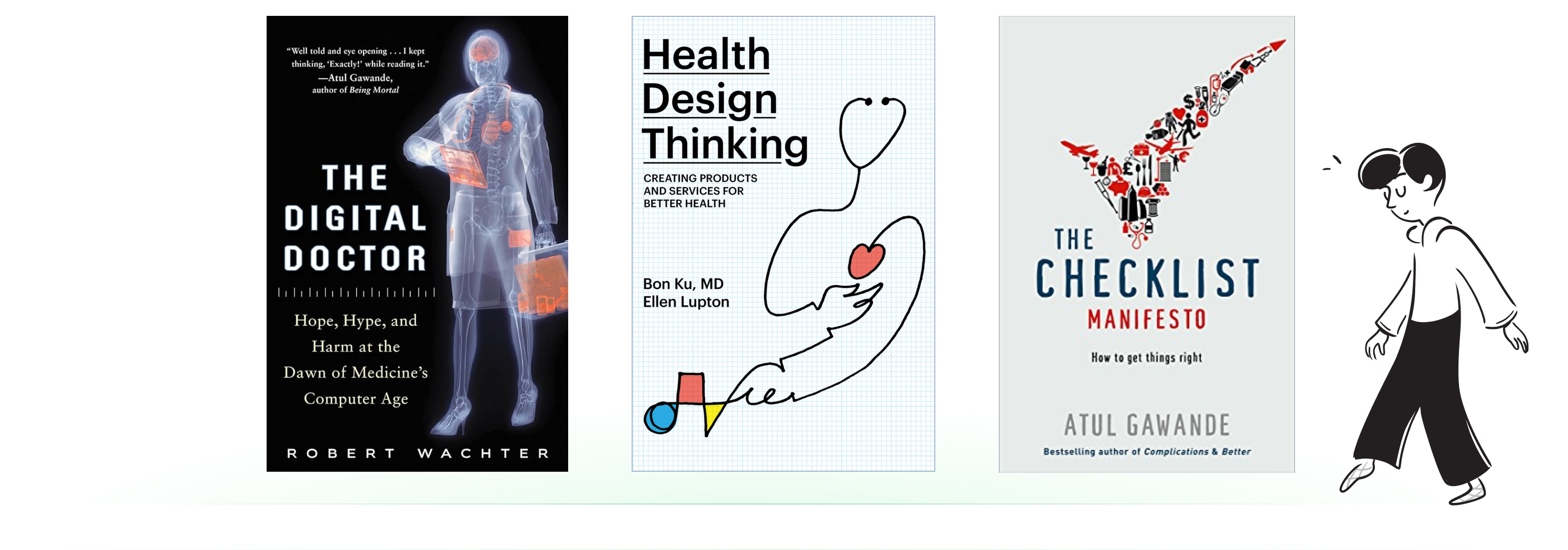
The Digital Doctor by Robert Wachter
Electronic medical records and other digital tools for healthcare workers were meant to revolutionize patient care and result in better health outcomes. What actually happened? Doctors are no longer making eye contact with their patients and they spend a large percentage of their time doing clerical work instead of clinical work. Many (most?) of the promised outcomes have never come to pass. This book provides excellent insight into what went wrong and how we might do better going forward.
Health Design Thinking by Dr. Bon Ku and Ellen Lupton
This is a book that is full of examples. The authors show dozens of projects where design was used to improve healthcare experiences. They demonstrate how observation, prototyping, and human-centered design can help uncover problems that traditional healthcare approaches often miss. The book offers a practical introduction for designers who want to work in healthcare and for healthcare professionals looking to bring design thinking into their organizations.
The Checklist Manifesto by Dr. Atul Gawande
In this classic book, Gawande explores a surprisingly simple idea: in complex environments, even experts benefit from well-designed checklists. Drawing on examples from medicine, aviation, and other high-stakes fields, he shows how small changes to process can prevent mistakes, improve teamwork, and save lives. The book is a powerful reminder that better outcomes often come not from breakthrough innovations, but from designing systems that help people do their best work consistently. As a designer, you might find yourself literally taking ideas out of this book to deliver better solutions for healthcare workers and their patients.
Best for people who want to work on climate change
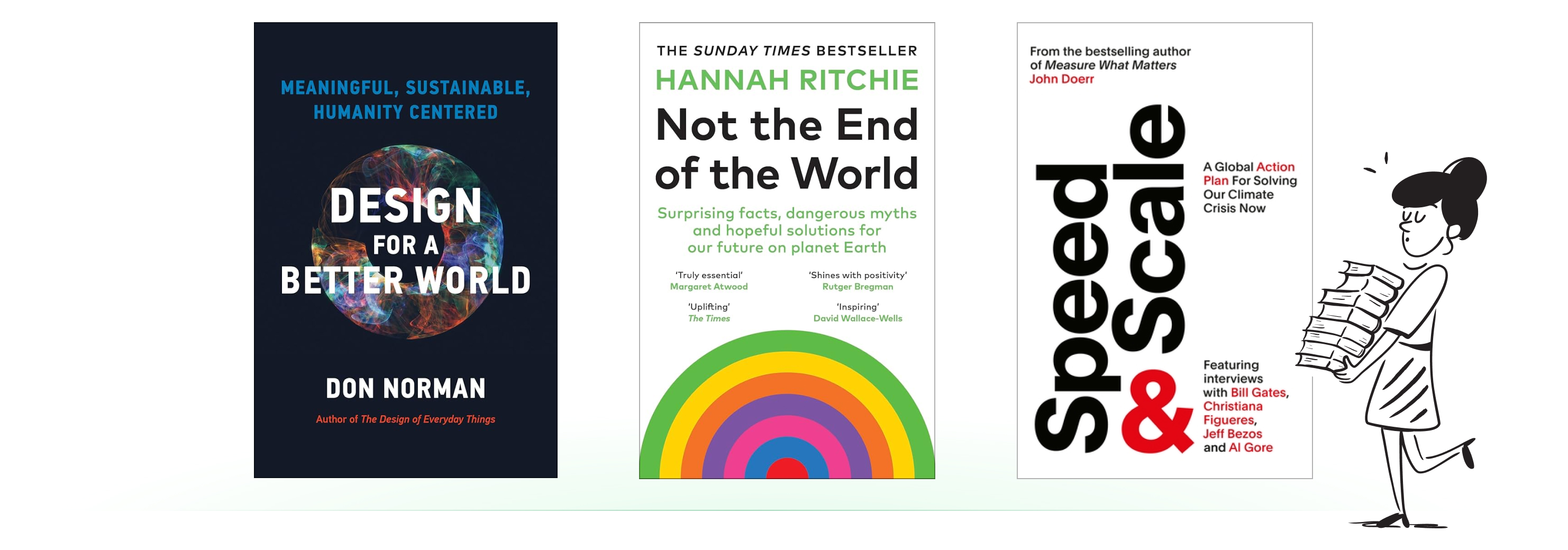
Design for a Better World by Don Norman
Old guard designer Don Norman argues that designers need to look beyond products and interfaces and focus on the broader systems that shape people’s lives. He challenges the design profession to take on complex issues such as climate change where meaningful progress requires collaboration across disciplines and institutions. The book offers a vision for how design can move from optimizing user experiences to helping create better outcomes for society as a whole.
Not the End of the World by Hannah Ritchie
As a designer, you might be familiar with Hannah’s contributions to the excellent website Our World in Data (we love it here at Hard Problems). In this book, she takes a data-driven look at some of the world’s biggest environmental challenges, from climate change and biodiversity loss to pollution and food production. While acknowledging the seriousness of these problems, she argues that progress is possible and highlights the technologies, policies, and choices that are already making a difference. The book offers a hopeful but evidence-based perspective for anyone who wants to understand the environmental issues facing the world.
Speed & Scale by John Doerr
From influential champion of OKRs, John Doerr, this book argues that solving climate change requires the same combination of ambition, measurement, and execution that drives successful organizations like Intel. He lays out a practical roadmap for reducing emissions across energy, transportation, food, industry, and other sectors, highlighting the actions needed to reach net-zero emissions. The book provides a useful overview of where the biggest opportunities lie and how people from different backgrounds — including designers, entrepreneurs, policymakers, and investors — can contribute to meaningful change.
Have suggestions for more books that we should include?
Please send us your recommendations to [email protected].